Aug 29,2026
What Is a Slitting Rewinding Machine?
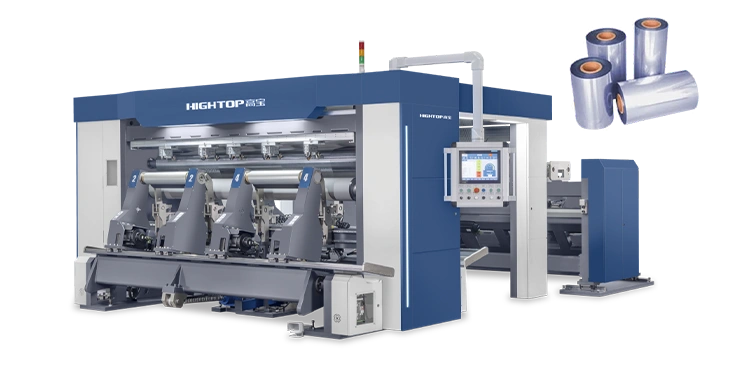
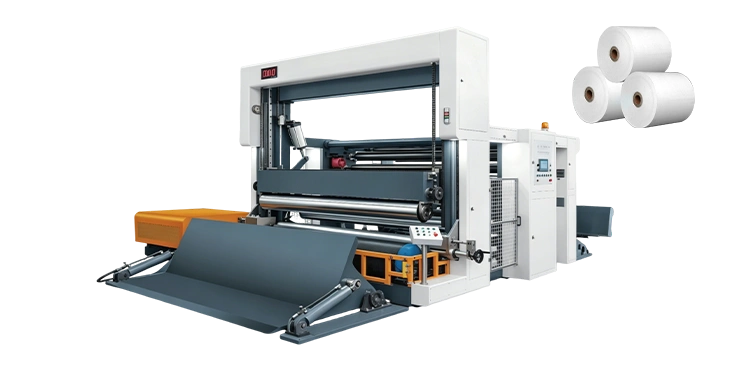
A slitting rewinding machine—also called a slitter rewinder—is industrial equipment that converts large rolls of material (parent rolls / jumbo rolls) into narrower, custom-sized rolls.
The process follows a continuous workflow:
Parent Roll (Unwind) → Tension Control → Slitting (Longitudinal Cut) → Web Guiding → Rewinding → Finished Narrow Rolls
The material unwinds from a large master roll, passes through controlled tension zones, gets slit longitudinally by blades into multiple narrow strips, and is rewound onto smaller cores. The result is a set of finished rolls ready for downstream converting, printing, or end-use applications.
What the Machine Does
A slitter rewinder performs three core functions in one continuous operation:
-
Unwinding – feeds the parent roll into the machine at controlled speed
-
Slitting – cuts the full-width web into multiple narrower strips
-
Rewinding – winds each strip onto individual cores to create finished rolls
Typical Converting Workflow
-
Parent roll loading – the jumbo roll is mounted on the unwind shaft
-
Web threading – the material is guided through the machine path
-
Tension establishment – proper tension is set for the specific material
-
Slitting – blades divide the web to required widths
-
Rewinding – each slit strip is wound onto its own core
-
Roll unloading – finished rolls are removed and prepared for packaging or further processing
Slitter vs Slitter Rewinder
These terms are often used interchangeably, but there is a distinction:
-
Slitter – generally refers to the cutting function alone; may be a standalone slitting station within a larger production line
-
Slitter Rewinder – a complete, integrated machine that performs both slitting and rewinding in one unit, with unwinding, tension control, guiding, and winding all coordinated
Most modern converting equipment is built as a complete slitter rewinder, as the integrated design ensures consistent tension and registration between slitting and rewinding.
Difference Between Slitting and Sheeting
| Slitting Rewinder | Sheeting Machine | |
|---|---|---|
| Input | Roll (parent roll) | Roll (parent roll) |
| Output | Narrow rolls | Flat sheets |
| Main process | Longitudinal cut (along the web direction) | Cross cut (across the web direction) |
| Typical application | Film, labels, roll paper | Paper sheets, cut-to-size formats |
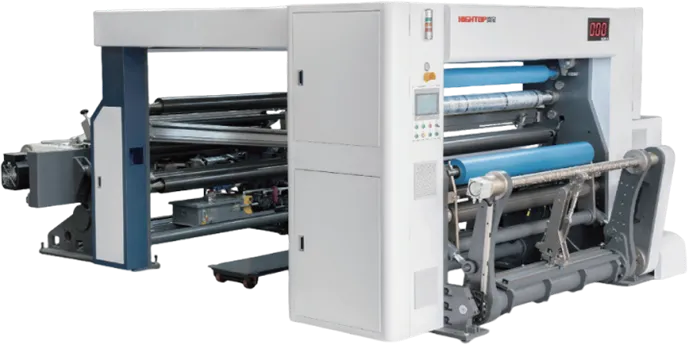
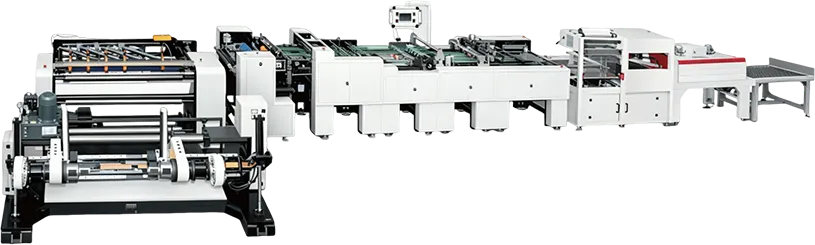
Slitting keeps the material in roll form for continuous downstream processing. Sheeting converts rolls into individual flat pieces for applications like copy paper, packaging sheets, and printed materials. For more details, see our Slitting Rewinding Machine and Sheeting Machine product pages.
Main Sections of a Slitter Rewinder
A slitter rewinder consists of several integrated sections, each performing a critical function. Understanding these components helps in selecting the right machine and diagnosing operational issues.
Unwinding Unit
The unwind section holds and feeds the parent roll into the machine.
Key configurations:
-
Shaft unwind – uses a driven shaft inserted through the roll core
-
Shaftless unwind – chucks grip the roll from both ends without a through-shaft, allowing faster roll changes
Critical components:
-
Braking system – controls roll rotation to maintain proper back tension
-
Roll loading – hydraulic or pneumatic systems for safe roll positioning
-
Dancer roller – maintains constant web tension through mechanical feedback
HighTop machines feature servo-driven unwind sections with automatic tension management for consistent web feeding.
Web Guiding System
The web guide ensures the material travels straight through the machine, preventing edge wander and ensuring accurate slitting.
Common technologies:
-
Ultrasonic edge detection – senses web edge position contactlessly
-
CCD camera guidance – optical edge tracking for high precision
-
Pneumatic/hydraulic guides – steers the web laterally to maintain alignment
Automatic web guiding reduces edge waste and keeps slit widths within specification.
Tension Control
Tension control is arguably the most critical factor in slitting quality. Improper tension causes wrinkles, telescoping, stretching, and poor roll formation.
Control methods:
-
Load cell feedback – measures actual web tension in real time
-
Dancer roller systems – mechanical tension sensing and adjustment
-
Servo motor control – precise, programmable tension for different materials
HighTop machines integrate intelligent tension control systems that minimize edge waste and ensure consistent roll density.
Slitting Unit
The slitting station houses the cutting blades that divide the web into narrower strips. Different slitting methods apply to different materials (see Section 3).
Key considerations:
-
Knife type – razor, shear, or score/crush
-
Knife positioning – manual or automatic positioning systems
-
Blade change – quick-change systems reduce downtime
-
Rewinding Unit
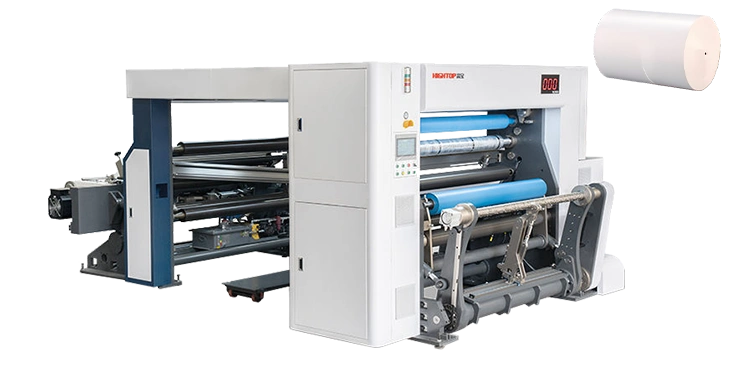
The rewind section takes the slit strips and winds them onto cores to create finished rolls.
Winding configurations:
-
Center winding – driven by the rewind shaft torque
-
Surface winding – driven by contact with a drum or roller
-
Center-surface winding – combines both methods
-
Differential winding – individual torque control for each slit strip
-
Drive & Control System
Modern slitter rewinders are controlled by PLC (Programmable Logic Controller) systems with HMI (Human-Machine Interface) touchscreens.
Key features:
-
Recipe storage – saves settings for different materials and jobs
-
Servo motor drives – precise speed and tension control
-
Fault diagnostics – real-time monitoring and alerts
-
Remote monitoring – optional connectivity for off-site support
Safety System
Safety features protect operators and equipment during high-speed operation.
Standard safety components:
-
Emergency stops – accessible at multiple machine positions
-
Guard interlocks – prevent operation when guards are open
-
Light curtains – detect operator presence in hazardous zones
-
Braking systems – stop rotating elements quickly in emergencies
Main Slitting Methods
There are three primary slitting methods used in slitter rewinders. Each has distinct advantages based on material characteristics and precision requirements.
| Method | Typical Materials | Advantages | Limitations |
|---|---|---|---|
| Razor Slitting | Thin films (BOPP, CPP, PET), lightweight laminates | Clean cuts, high speed, low tooling cost, simple adjustment | Not ideal for thick or abrasive materials, blade wear requires frequent changes |
| Shear Slitting | Paper, film, foil, laminates, nonwovens | Accurate, precise edge quality, versatile across materials | More complex setup, higher tooling cost |
| Score (Crush) Slitting | Paper, nonwoven, high-density rigid materials, board | Strong cutting force, works well for adhesives and edge trim removal | Rougher edge quality, not as clean as shear |
Razor Slitting uses razor blades mounted at an angle, either individually or in cassettes. The blade creates a tensile stress fracture as the material is pulled into it. This is the most economical method and works best for very thin substrates like films.
Shear Slitting uses pairs of blades (upper and lower) that act like scissors to cut the web. This is the most versatile method, accommodating a wider variety of materials than any other slitting technique.
Score Slitting uses a blade pressed against a hardened anvil roller to crush-cut the material. It works well for paper, nonwovens, and when frequent knife cleaning is required, such as when cutting through adhesives.
For high-precision applications, HighTop machines achieve cutting accuracy of ±0.2mm at speeds up to 800m/min.
How Rewinding Works
Rewinding is the process of taking the slit strips and winding them onto cores to create finished rolls. The winding method significantly affects roll quality, tension consistency, and downstream performance.
Center Winding
In center winding, the rewind shaft is motorized and drives the core directly. Only the rewind shaft is powered; the lay-on roller (contact roller) remains free and unpowered.
Characteristics:
-
Tension is controlled through shaft torque
-
Suitable for materials that can tolerate core-driven tension
-
Lower cost but can be less stable for certain materials
Surface Winding
Surface winding drives the roll through contact with a rotating drum or roller. The finished roll sits on the drum and is rotated by friction.
Characteristics:
-
More stable tension control
-
Better for stiff materials and large diameters
-
Limited precision compared to center winding
Center-Surface Winding (Combination)
This method combines both approaches. The rewind shaft is driven (center winding) while a lay-on roller provides additional nip pressure (surface winding). This offers the benefits of both methods and is common in high-performance machines.
Differential Rewinding
Differential rewinding is a technique where each slit strip is wound on a separate shaft with individual torque control. This is especially important when slitting multiple strips of different widths, as each strip may require different tension to form a quality roll.
Why it matters: Without differential control, wider strips may wind too tightly while narrower strips become loose, causing telescoping, starring, or bagginess.
GAOBAO Configurations
HighTop offers multiple rewind configurations across its product series:
-
GBK Series – premium slitter with servo-driven rewind, automatic unloading, speeds up to 800m/min
-
DGFQ Series – shaft-less single rewinder with double bottom drum drive structure
-
ATFQ Series – turret non-stop structure for continuous production
-
FQM Series – servo motor drive with automatic unloading and tension control
Materials That Can Be Slit and Rewound
Slitter rewinders process a wide range of roll materials across multiple industries. Different materials present different challenges and require specific machine configurations.
| Material | Key Challenge | Typical Machine Consideration |
|---|---|---|
| Kraft Paper | Stiffness, dust generation | Robust knife system, dust extraction |
| Coated Paper | Surface protection, coating integrity | Precise tension stability, non-marring rollers |
| Label Stock | Adhesive transfer, liner stretch | Roll alignment, differential winding, adhesive-compatible blades |
| BOPP | Stretch, static electricity | Low stable tension, anti-static bars |
| PET | Stiffness, high strength | Precision tension control, strong knife system |
| CPP | Extensibility, heat sensitivity | Winding control, temperature management |
| Aluminum Foil | Tearing, dust, surface marking | Low tension, dust extraction, anti-scratch rollers |
| Nonwoven | Loft compression, telescoping | Low-tension winding, dust-free cutting |
Industry-Specific Applications
Paper Industry
-
Wrapping paper, kraft paper, cup paper (20–300gsm)
-
Coated paper, silicone oil paper, white cardboard (200–400gsm)
-
Office paper, cigarette paper, fast food paper
Label Industry
-
Self-adhesive paper and label stock
-
Adhesive composite materials
Flexible Packaging
-
BOPP, CPP, PET and other plastic films
-
Printed films and laminates
Technical Applications
-
Medical nonwovens (SMS/spunbond)
-
Electronic/optical protective films
-
Battery separators, graphene
-
Medical-grade aluminum foil
-
Specialty industrial papers
For detailed material-specific guidance, visit our application pages: Paper, Label, Flexible Packaging, and Technical Applications.
Key Machine Specifications
Understanding machine specifications is essential for selecting the right equipment. Each specification directly impacts production capability and finished roll quality.
Max Web Width
The maximum width of material the machine can accept. This determines the size of parent rolls you can process.
Why it matters: Choose a machine that matches your largest parent roll width. Processing narrower rolls on a wider machine is inefficient; processing wider rolls on a narrower machine is impossible.
Min Slit Width
The narrowest finished roll width the machine can produce.
Why it matters: Determines the smallest product you can offer. HighTop machines achieve minimum slit widths from 10mm to 40mm depending on the model.
Max Unwind Diameter
The largest parent roll diameter the machine can handle.
Why it matters: Larger unwind diameters mean longer production runs between roll changes, reducing downtime and increasing throughput. HighTop machines accommodate unwind diameters from Φ1200mm to Φ1800mm.
Max Rewind Diameter
The largest finished roll diameter the machine can produce.
Why it matters: Determines the size of finished rolls you can deliver to customers. Larger diameters mean fewer roll changes downstream. HighTop machines offer rewind diameters up to 800mm on some models.
Machine Speed
The maximum operating speed of the machine, typically measured in meters per minute.
Why it matters: Higher speeds increase throughput but may require more sophisticated tension control. Speed must be balanced against material characteristics. HighTop machines operate from 400m/min to 800m/min depending on the model.
Tension Range
The range of web tension the machine can apply and control.
Why it matters: Different materials require different tensions. Films need low, stable tension; papers can tolerate higher tension. Machines with wider tension ranges are more versatile. HighTop's intelligent tension control minimizes edge waste across material types.
Core Diameter
The internal diameter of cores used for rewind rolls.
Why it matters: Must match your downstream equipment and customer requirements. Common core diameters include 3-inch (76mm) and 6-inch (152mm).
Material Thickness
The range of material thickness (gsm or micron) the machine can process.
Why it matters: Thicker materials require more cutting force and different blade geometries. Thinner materials require more precise tension control. HighTop machines process paper from 20–300gsm and nonwoven from 20–200micron.
Slitting Accuracy
The precision of slit width consistency, typically expressed as ± tolerance.
Why it matters: Determines product quality and waste. Tight tolerances reduce scrap and ensure customer satisfaction. HighTop achieves ±0.2mm cutting accuracy at 800m/min.
How to Choose a Slitter Rewinder
Selecting the right slitter rewinder requires a structured approach based on your specific production needs.
Step 1: What Material Are You Processing?
Different materials require different machine configurations:
-
Paper – consider dust management, knife durability
-
Film – consider anti-static, low-tension control
-
Foil – consider low tension, anti-scratch features
-
Label stock – consider adhesive handling, differential winding
-
Nonwoven – consider dust-free cutting, low-tension winding
Step 2: Parent Roll Width and Diameter
Define the maximum size of your incoming rolls. This determines:
-
Required unwind width capacity
-
Required unwind diameter capacity
-
Roll loading system (manual or automatic)
Step 3: Finished Roll Width
Define your required slit widths:
-
Minimum slit width needed
-
Range of widths to accommodate
-
Number of slits per pass (determined by parent width ÷ slit width)
Step 4: Required Speed
Consider your production targets:
-
Current throughput requirements
-
Future growth projections
-
Balance between speed and quality
Offline converting machines typically operate at least 1.5 times the speed of the lines that supply the parent rolls.
Step 5: Core Size
Specify core requirements for finished rolls:
-
Core diameter (3″, 6″, or custom)
-
Core material (paper, plastic, metal)
-
Core loading system (manual or automatic)
Step 6: Slitting Accuracy
Define your quality requirements:
-
Tolerances for slit width (±0.2mm, ±0.5mm, etc.)
-
Edge quality requirements (burr-free, clean cut)
-
Inspection and quality control needs
Step 7: Automation Level
Determine the degree of automation needed:
-
Manual – lower cost, suitable for low volumes
-
Semi-automatic – some automated functions (unloading, guiding)
-
Fully automatic – high efficiency, minimal operator intervention
HighTop machines offer various automation features including automatic knife positioning, automatic threading, automatic unloading, and recipe storage.
Step 8: Future Production Expansion
Consider future needs:
-
Will you process new materials?
-
Will production volumes increase?
-
Is the machine upgradable?
Modular designs allow for upgrading and extended service life of core components.
Machine Types and When to Use Them
HighTop offers multiple slitter rewinder series, each designed for specific applications and material types.
GBK Series – Label, Paper, Flexible Packaging
Best suited for: Self-adhesive materials, paper, and flexible packaging
Key features: Siemens control system, ergonomic operation, 600–800m/min speed, automatic production
DGFQ Series – Raw Paper, Coated Paper
Best suited for: Raw paper and coated paper processing
Key features: Shaft-less single rewinder, double bottom drum drive, 600–800m/min, fast unloading
DFLM Series – Plastic Films (BOPP, CPP, PET)
Best suited for: Plastic film slitting
Key features: Siemens control systems, intelligent automation, automatic blade changes, minimal setup times
ATFQ Series – Plastic Films and Paper
Best suited for: High-production plastic film and paper slitting
Key features: Turret non-stop structure, servo motor drive, intelligent automation, high production efficiency
CM Series – Self-Adhesive Label, Non-Sensitive Films
Best suited for: Basic slitting applications
Key features: Max rewind diameter 800mm, automatic unloading, automatic web guide and tension control
FQM Series – Plastic Films (BOPP, CPP, PET)
Best suited for: Plastic film slitting with servo drive
Key features: Servo motor drive, automatic unloading, automatic web guide and tension control
MBC Series – Straw Paper, Paper-Plastic Composites
Best suited for: Decorative materials, wallpapers, waterproof materials
Key features: Surface winding and slitting, gift paper processing
FQFJ Series – Coated Paper, Silicon-Coated Paper
Best suited for: Super-large rolling materials
Key features: Handles 200–400gsm kraft paper, white cardboard, coated paper, silicone oil paper, aluminum foil, PVC film, non-woven
FQA Series – Cup Paper, Kraft Paper
Best suited for: Paper bag and paper cup industry
Key features: Paper range 20–300gsm, nonwoven 20–200micron
Common Slitting and Rewinding Problems
Understanding common issues helps diagnose problems quickly and maintain production quality.
| Problem | Possible Cause | What to Check |
|---|---|---|
| Uneven roll tension | Incorrect tension settings, worn brake pads, dancer roller issues | Tension settings, brake condition, dancer roller movement |
| Telescoping | Poor tension control, misaligned rollers, incorrect winding mode | Tension settings, roller alignment, winding method |
| Wrinkling | Trapped air, incorrect tension, roller misalignment | Winding nip pressure, tension settings, roller condition |
| Edge defects | Dull blades, incorrect blade angle, material variation | Blade condition, blade angle, material consistency |
| Roll wandering | Web guide failure, edge detection issues, roller misalignment | Web guide operation, edge sensor function, roller alignment |
| Inconsistent slit width | Blade wear, blade positioning issues, web tension variation | Blade sharpness, knife positioning system, tension stability |
| Excessive dust | Blade wear, material dust generation, poor dust extraction | Blade condition, dust extraction system, material handling |
Diagnostic approach: For each problem, start with the most likely cause (tension or blade condition) and work systematically through the web path. Modern machines with fault diagnostics can identify many issues automatically.
Slitting Machine vs Sheeting Machine
Understanding the difference between slitting and sheeting helps buyers choose the right equipment for their needs.
| Slitting Rewinder | Sheeting Machine | |
|---|---|---|
| Input | Roll (parent roll / jumbo roll) | Roll (parent roll) |
| Output | Narrow rolls (continuous) | Flat sheets (individual pieces) |
| Main process | Longitudinal cut (along web direction) | Cross cut (across web direction) |
| Cut direction | One direction (lengthwise) | Two dimensions (length and width) |
| Typical application | Film, labels, roll paper, packaging materials | Copy paper sheets, packaging sheets, printed materials |
| Downstream use | Continuous production (printing, converting, packaging) | Finished product or further converting |
A slitter rewinder keeps material in roll form, supporting continuous downstream processes. A sheeting machine cuts rolls into individual flat pieces, producing finished sheets ready for use.
HighTop manufactures both Slitting Rewinding Machines and Sheeting Machines, allowing customers to choose the right solution for their output requirements.
What Information Should You Send Before Requesting a Machine?
To get an accurate machine recommendation and quotation, prepare the following information:
-
Material type – paper, film, foil, nonwoven, label stock, or composite
-
Material thickness – gsm for paper, micron for film
-
Parent roll width – maximum and typical widths
-
Parent roll diameter – maximum unwind diameter
-
Finished roll width – slit width(s) required
-
Core size – core diameter for finished rolls
-
Required speed – target production speed (m/min)
-
Production volume – daily/weekly output targets
-
Sample – material sample for testing
-
Drawing – technical drawing or specification sheet if available
Send Your Roll Specifications – HighTop provides one-to-one customized solutions based on your specific requirements. Contact us with your specifications to receive a tailored machine recommendation.
GAOBAO Slitting & Rewinding Capabilities
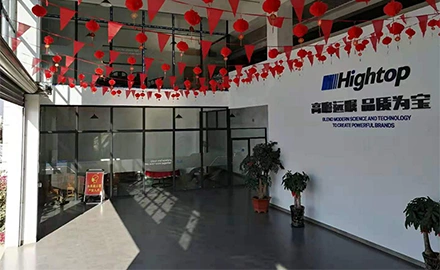
Zhejiang Gaobao Machinery Co., Ltd. (Hightop brand) is a leading manufacturer of slitter rewinders and sheeters in China, specializing in jumbo roll material processing equipment for over 12 years.
Facility & Capacity
Zhejiang Gaobao Machinery Co., Ltd. (Hightop) operates a modern 30,000+ m² production facility with over 116 employees across R&D, manufacturing, sales, and service. Backed by 48+ patents and serving 500+ global clients—including industry leaders like Sun Paper and APP—the company delivers reliable slitting and rewinding solutions worldwide.
Quality & Certifications
-
CE/ISO certified
-
ISO 9001 Quality Management System certification
-
National high-tech enterprise recognition
-
Wenzhou Enterprise Technology Center (2021)
-
17+ patents currently under processing
Key Technologies
-
Precision cutting – ±0.2mm at 800m/min, burr-free, servo-driven
-
Intelligent tension control – reduces material waste
-
Automatic web guiding – minimizes edge waste
-
Servo motors and variable frequency drives – reduce energy consumption
-
Modular design – allows for upgrading and extended service life
Product Series
HighTop offers multiple series covering paper, film, label, foil, and technical applications: GBK, DGFQ, DFLM, ATFQ, CM, FQM, MBC, FQFJ, FQA, and LBFQ series.
Global Presence
With a mature export network serving 60+ countries across North America, South America, Europe, Middle East, Africa, and Southeast Asia, HighTop provides roll-to-roll processing solutions worldwide.
Workshop & Manufacturing
HighTop's modern machining center and workshop facilities support precision manufacturing and quality control, with real workshop imagery available on the product pages.
Video
Watch our Video to see HighTop slitter rewinders in action, from unwinding to finished rolls.
Contact Us
See HighTop's slitting rewinding solutions in action – contact us for product demonstrations and video content.
Frequently Asked Questions
What materials can a slitter rewinder process?
Slitter rewinders can process paper (kraft, coated, cup paper, silicone paper), plastic films (BOPP, CPP, PET), aluminum foil, label stock, nonwoven materials, and composites. Material thickness ranges from thin films to 400gsm paper.
How do I calculate required machine width?
Required machine width equals your maximum parent roll width plus allowance for edge trimming and web guiding. Choose a machine with capacity at least equal to your widest incoming roll.
What determines minimum slit width?
Minimum slit width is determined by:
-
Blade type and geometry
-
Material thickness and stiffness
-
Machine design and knife positioning system
-
Required edge quality
HighTop machines achieve minimum slit widths from 10mm to 40mm depending on the model and material.
How does tension affect finished rolls?
Improper tension causes multiple defects:
-
Too high – stretching, deformation, core crushing
-
Too low – loose rolls, telescoping, poor edge alignment
-
Inconsistent – wrinkles, bagginess, starring
Proper tension control is essential for uniform roll density and downstream performance.
Razor or shear slitting – which should I choose?
-
Razor slitting – best for thin films and lightweight materials; lower cost, clean cuts
-
Shear slitting – best for paper, foil, and versatile applications; more accurate, handles wider material range
-
Score slitting – best for paper, nonwovens, and adhesive materials
The choice depends on your primary materials and quality requirements.
What information is required for machine selection?
Provide: material type, thickness, parent roll width and diameter, finished roll width, core size, required speed, production volume, and material samples. This enables accurate machine specification and quotation.
For more information about HighTop slitting rewinding machines, visit our product page or contact us for a personalized consultation.

 Aug 29,2026