Aug 31,2026
If you are a converter, printer, or packaging manufacturer, you have likely faced this question: with so many slitter rewinder configurations available, how do you know which one is right for your operation? The answer is not as simple as picking the fastest machine or the one with the most features. The right choice depends on the materials you process, the precision you require, and the production environment you operate in.
This guide breaks down the key decision factors—from material properties and slitting methods to tension control and machine specifications—so you can approach your equipment selection with confidence.
Understand Your Materials First
The single most important factor in selecting a slitter rewinder is the material you plan to process. Different materials behave differently under tension, react differently to cutting forces, and require different winding strategies.
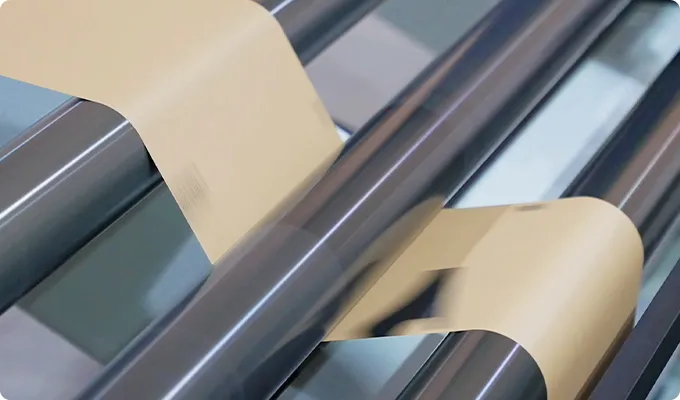
Paper (Kraft, coated, cup paper)
-
Key challenge: stiffness and dust generation
-
What to look for: robust knife systems, dust extraction, tension stability for coated surfaces
-
Typical thickness range: 20–300gsm
Film (BOPP, CPP, PET)
-
Key challenge: stretch, static electricity, extensibility
-
What to look for: low stable tension control, anti-static bars, smooth rollers
-
Why it matters: thin films stretch easily under excessive tension, causing dimensional instability and waste. Ultra-thin films demand fine tension control and smooth rollers.
Label Stock (Self-adhesive paper, film labels)
-
Key challenge: adhesive transfer, liner stretch, slit consistency
-
What to look for: differential winding, adhesive-compatible blades, roll alignment
-
Why it matters: pressure-sensitive labels often require very tight width accuracy, and adhesive bleed can ruin downstream converting.
Aluminum Foil
-
Key challenge: tearing, dust, surface marking
-
What to look for: low tension control, dust extraction, anti-scratch rollers
-
Why it matters: foil is highly tear-sensitive; even slight tension spikes can cause web breaks and material waste.
Nonwoven / Technical Materials
-
Key challenge: loft compression, telescoping, dust-free cutting
-
What to look for: low-tension winding, dust-free cutting systems
-
Why it matters: medical and electronic applications require zero-contamination processing.
The broader principle is this: a machine configured for heavy paper will not perform well on thin film, and vice versa. Understanding your material mix—now and in the future—is the foundation of smart equipment selection.For material-specific guidance, explore HIGHTOP's application pages for Paper, Label, Flexible Packaging, and Technical Applications.
Match the Slitting Method to Your Material
There are three primary slitting methods used in slitter rewinders. Each has distinct advantages and limitations based on material characteristics.
| Method | Best For | Advantages | Limitations |
|---|---|---|---|
| Razor Slitting | Thin films, lightweight laminates | Clean cuts on thin webs, low tooling cost, simple adjustment | Short blade life, frequent replacement, not ideal for thick materials |
| Shear Slitting | Paper, foil, laminates, nonwovens | Precise and accurate edge quality, versatile across materials | More complex setup, higher initial investment |
| Score (Crush) Slitting | High-density rigid board, foam, nonwoven | Strong cutting force, works through adhesives | Rougher edges, more dust |
How to decide:
-
If you primarily process thin films (≤50μm) , razor slitting offers clean, high-speed cuts with simple setup.
-
If you process paper, foil, or mixed materials, shear slitting provides the best balance of edge quality and versatility.
-
If you cut adhesive materials, nonwovens, or rigid board, score slitting may be your best option.
Why Tension Control Is the Hidden Determinant of Quality
Web tension control is arguably the most critical factor in slitting quality—yet it is often overlooked in the selection process.
What tension control does:
-
Prevents wrinkles, web breaks, and material distortion
-
Ensures consistent roll density and edge alignment
-
Reduces waste from telescoping, starring, and bagginess
What to look for in a machine:
-
Closed-loop servo systems – provide real-time tension feedback and adjustment
-
Load-cell feedback – monitors actual web tension directly
-
Dancer roller systems – mechanical tension sensing for stability
-
Synchronized drives – maintain consistent tension from unwind to rewind
Why it matters to you:
-
For films: inconsistent tension causes stretching and dimensional instability. Premium slitter rewinders use engineered rollers, anti-wrinkle systems, and rigid machine frames to preserve web geometry and protect film integrity.
-
For paper: poor tension control leads to telescoping and edge damage.
-
For labels: tension variation causes adhesive bleed and liner stretch.
Key Machine Specifications—and What They Mean for You
Understanding machine specifications is essential, but specifications only matter when translated into real operational impact. Here is what each key specification actually means for your production.
| Specification | What It Measures | Why It Matters to You |
|---|---|---|
| Max Web Width | Widest parent roll the machine can accept | Determines the largest roll you can process. Match to your widest incoming material. |
| Min Slit Width | Narrowest finished roll the machine can produce | Determines the smallest product you can offer. Critical for labels and narrow-web applications. |
| Max Unwind Diameter | Largest parent roll diameter | Larger diameter = longer runs between roll changes = less downtime. |
| Max Rewind Diameter | Largest finished roll diameter | Determines finished roll size for your customers. |
| Machine Speed | Maximum operating speed (m/min) | Higher speed = higher throughput. But speed must be balanced with material characteristics. |
| Slitting Accuracy | Width consistency tolerance (±mm) | Tighter tolerance = less waste, better customer satisfaction. Labels and medical packaging often require very tight width accuracy. |
The selection logic: Start with your material (determines tension and slitting method), then match specifications to your production requirements (width, diameter, speed), and finally consider automation level based on your volume and labor availability.
A Step-by-Step Selection Framework
Use this framework to systematically evaluate your needs before engaging with equipment suppliers.
Step 1: Define your current and future material mix
-
List all materials you currently process
-
Identify materials you may add in the next 2–3 years
-
Note thickness ranges and any special properties (static-sensitive, adhesive, heat-sensitive)
Step 2: Measure your parent roll parameters
-
Maximum roll width
-
Maximum roll diameter
-
Core size (3″, 6″, or custom)
Step 3: Define finished roll requirements
-
Required slit widths (minimum and range)
-
Required rewind diameter
-
Core size for finished rolls
-
Tolerances (width accuracy, edge quality)
Step 4: Determine production targets
-
Required speed (m/min)
-
Daily/weekly output volume
-
Number of shifts and operator availability
Step 5: Assess automation needs
-
Manual setup vs. automatic knife positioning
-
Automatic threading vs. manual threading
-
Automatic unloading vs. manual unloading
-
Recipe storage for quick changeovers
Step 6: Consider future expansion
-
Will you process new materials?
-
Will production volumes increase?
-
Is the machine upgradable?
Step 7: Evaluate supplier capabilities
-
Does the manufacturer have experience with your materials?
-
What is their service and support network?
-
Can they provide references in your industry?
Common Application Scenarios
Scenario 1: Label Converter Processing Self-Adhesive Stock
A label converter processes pressure-sensitive label stock on paper and film liners. The key considerations are:
-
Slitting method: Shear slitting is preferred for clean edges and adhesive compatibility
-
Tension control: Critical to prevent liner stretch and adhesive bleed
-
Rewind: Differential winding ensures consistent tension across multiple slit widths
-
Accuracy: ±0.1mm precision is often required for reliable die-cutting and automatic application
Scenario 2: Flexible Packaging Converter Processing BOPP and PET Films
A flexible packaging converter runs BOPP, CPP, and PET films for lamination and pouch-making. Key considerations:
-
Slitting method: Razor slitting for thin films, shear for thicker or multi-layer films
-
Tension control: Low, stable tension to prevent stretch and distortion
-
Static control: Anti-static bars to prevent dust attraction and handling issues
-
Speed: High-speed capability to match upstream extrusion or printing lines
Scenario 3: Paper Converter Processing Coated and Kraft Paper
A paper converter processes kraft paper, coated paper, and specialty papers. Key considerations:
-
Slitting method: Shear slitting for clean edges on coated papers; score slitting for heavy kraft
-
Dust management: Dust extraction systems to maintain quality and operator safety
-
Roll weight: Heavy-duty construction for large-diameter parent rolls
Next Steps—From Guide to Selection
By now, you should have a clear understanding of the key decision factors: material properties determine tension and slitting method requirements; specifications must match your production parameters; and automation level should align with your volume and labor strategy.
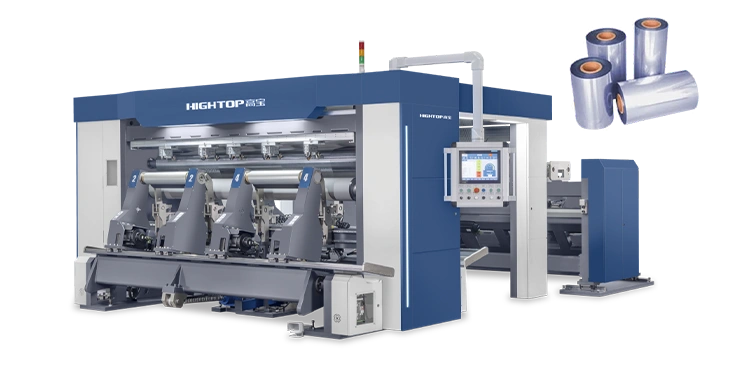
Once you have clarified these factors, comparing the specific configurations of available machines becomes the next logical step. You can review HIGHTOP's Slitting Rewinding Machine series—including GBK for labels and flexible packaging, DFLM for plastic films, and DGFQ for paper applications—to see which configuration aligns with your material and production requirements.
For converters processing both rolls and sheets, understanding the difference between slitting and sheeting is also valuable. Our guide on Slitting vs. Cutting explains when each process is appropriate.

 Aug 31,2026