Sep 07,2026
If you have ever unloaded a finished roll from your slitting rewinding machine only to find inconsistent widths, rough edges, or telescoping layers, you have experienced firsthand what happens when slitting accuracy falls short. For converters processing paper, film, labels, or foil, the difference between ±0.2mm and ±1.0mm can mean thousands of dollars in wasted material annually—not to mention rejected shipments and lost customer confidence.
Slitting accuracy is not a single attribute; it is the cumulative result of multiple interdependent factors. This guide breaks down the key determinants of slitting precision—from mechanical design to process control—so you can diagnose issues and make informed equipment decisions.
What Does “Slitting Accuracy” Actually Mean?
Slitting accuracy refers to the machine's ability to cut material into strips of exact width while maintaining clean, burr-free edges. It is typically expressed as a tolerance—for example, ±0.2mm or ±0.1mm—indicating the maximum deviation from the target slit width.
Why it matters to your operation:
-
Tighter tolerances = less waste – narrower trim allowances and fewer off-spec rolls
-
Consistent widths = better downstream performance – printing, laminating, and converting all depend on uniform roll dimensions
-
Clean edges = fewer quality rejections – burrs, ragged edges, and dust contaminate finished products
While some applications tolerate ±0.5mm or wider, high-value applications like lithium battery separators, optical films, and precision labels demand tolerances as tight as ±0.05mm to ±0.1mm.
Factor 1: Machine Mechanical Design and Rigidity
The physical construction of a slitter rewinder is the foundation upon which all other accuracy factors depend.
Frame rigidity and vibration control
A machine with a rigid, heavy steel frame absorbs vibration and maintains alignment during high-speed operation. Conversely, a lightweight or poorly constructed frame flexes under load, causing:
-
Knife deflection – blades shift position as the web passes through
-
Vibration-induced errors – high-frequency oscillations create wavy slit lines
-
Alignment drift – components lose positional accuracy over time
What to look for: Machines with dual-bearing support to minimize radial and axial vibration, and frame resonance analysis to avoid structural deflection. Premium slitters use heavy steel frames and dynamically balanced rollers to ensure vibration-free operation even at high speeds.
Tool shaft precision
The tool shaft must maintain radial runout within ±0.005mm to avoid burrs or deviations caused by vibration. Even minor lateral swing—typically 0.03–0.05mm under load—can cause width inconsistencies. Dynamic balance correction of the tool shaft reduces vibration during high-speed operation.
Accumulated tolerance error
When slitting multiple strips simultaneously, each knife and spacer contributes to the total width. With spacer thickness accuracy typically at 0.005mm, the accumulated error grows with the number of slits. High-precision machines account for this through careful tolerance management and precision-machined components.
Factor 2: Tension Control—The Hidden Determinant
Web tension control is arguably the single most important factor affecting slitting accuracy. Improper tension causes materials to stretch, contract, or wander, directly impacting slit width consistency.
How tension affects accuracy:
| Tension Issue | Effect on Slitting Accuracy |
|---|---|
| Too high | Material stretches, slit widths become narrower than target |
| Too low | Web wanders, edges become ragged, telescoping occurs |
| Fluctuating | Inconsistent width from start to end of roll |
| Uneven across web | One side stretches more than the other, causing crooked cuts |
What precision tension control delivers:
Modern slitter rewinders use closed-loop tension control systems with load cells or tension sensors providing real-time feedback. The controller dynamically adjusts unwinding and rewinding torque to maintain tension within ±1% or better. Research has shown that advanced tension control strategies can reduce tension deviation by 59% compared to conventional PID control.
Segmented tension control—applying different tension settings to unwinding, traction, and rewinding sections—prevents stretching or wrinkling as the material moves through the machine.
Taper tension automatically reduces tension as the roll diameter increases, preventing inner layers from being crushed or deformed.
For converters processing sensitive materials: Thin films, foils, and extensible materials like CPP require exceptionally stable low-tension control. Machines with servo-driven tension systems and high-precision sensors are essential for maintaining accuracy on these substrates. Explore HIGHTOP's application-specific configurations for Paper, Label, Flexible Packaging, and Technical Applications to see how tension control is tailored to different material families.
Factor 3: Slitting Method and Knife Configuration
The slitting method you choose—razor, shear, or score—directly determines the achievable accuracy.
| Method | Typical Accuracy | Best For | Accuracy Limitation |
|---|---|---|---|
| Razor Slitting | ±0.1–0.2mm | Thin films, lightweight materials | Blade wear, heat buildup |
| Shear Slitting | ±0.05–0.1mm | Paper, film, foil, laminates | Complex setup, precision spacers required |
| Score Slitting | ±0.2–0.5mm | Paper, nonwovens, adhesives | Rougher edges, knife wobble |
Razor slitting provides clean cuts on thin webs but blade wear is significant. Heat buildup at higher speeds can cause film melting and edge defects.
Shear slitting is the most accurate method, with shear systems achieving slit-width tolerance five times tighter than razor systems. The wrap shear-slitting technique, using precision spacers to position female knives, has been proven to achieve tolerances as tight as ±0.076mm. The web is fully supported by the bottom shaft of female knives, eliminating movement that could lead to sags or pulls.
Score slitting is less common for precision applications; edge accuracy can be affected by knife wobble.
Knife positioning accuracy
Even with the right slitting method, accuracy depends on knife positioning. Manual knife setup introduces human error; automatic knife positioning systems provide repeatable accuracy and reduce setup time. These systems can position knives to 0.025mm accuracy, eliminating the cumulative errors that occur with manual spacer stacking.
Factor 4: Web Guiding and Edge Control
The web guiding system ensures the material travels straight through the machine, preventing lateral wander that directly causes width inconsistencies.
How web guiding affects accuracy:
Without precise web guiding, the web drifts sideways relative to the slitting knives. Even a 0.5mm drift means every slit width is off by that amount—and the error compounds across multiple slits.
Precision guiding technologies:
-
Photoelectric or ultrasonic sensors detect edge position with accuracy up to ±0.1mm
-
CCD vision systems provide even higher precision, with correction accuracy reaching ±0.05mm
-
Servo-driven correction mechanisms respond within milliseconds to keep the web centered
A high-accuracy web guide system guarantees slitting margin accuracy in the range of ±0.1mm.
Factor 5: Material Properties
The material itself influences achievable accuracy. Different materials behave differently under the same slitting conditions.
| Material Characteristic | Impact on Accuracy |
|---|---|
| Thickness variation | Inconsistent cutting resistance creates width variation |
| Ductility | Stretches under tension, changing slit width |
| Stiffness | Rigid materials resist clean cutting, may deflect blades |
| Static charge | Attracts debris, interferes with edge detection sensors |
| Moisture content | Paper expands/contracts with humidity changes |
Examples:
-
PVC may retract slightly after cutting, affecting absolute slit width accuracy
-
Metallized films require careful handling to maintain coated surface integrity during slitting
-
Electrical insulation materials like mica tape demand precise tension control to prevent delamination
What this means for you: If you process multiple material types, your slitter rewinder must accommodate different tension settings, blade geometries, and web path configurations for each substrate.
Factor 6: Process Parameter Optimization
Even with perfect mechanical design, achieving consistent accuracy requires proper process parameter settings.
Slitting speed matching:
-
High speeds can cause inertial drift
-
Thick/hard materials need reduced speed
-
Thin/soft materials can run faster
Tool clearance and overlap:
-
For shear slitting, knife clearance should be adjusted based on material thickness (typically 10–20% of material thickness for films)
-
Tool overlap must be precisely controlled to avoid pulling or tearing the material
Winding pressure:
-
Constant pressure or taper winding prevents cross-layering and loose/tight roll inconsistencies
Environmental control:
-
Stable temperature and humidity (±2°C, 50%±5%RH) prevent thermal expansion and contraction of materials
How to Evaluate Slitting Accuracy When Choosing a Machine
When comparing slitter rewinders, use this checklist to assess accuracy capability:
1. Review the published accuracy specification
-
±0.2mm is standard for many industrial applications
-
±0.1mm or better indicates high-precision capability
-
Ask: “Under what conditions is this accuracy guaranteed?” (material type, speed, width)
2. Examine the machine frame and construction
-
Heavy steel frame with vibration-damping design
-
Dynamically balanced rollers
-
Precision-ground tool shafts
3. Assess the tension control system
-
Closed-loop control with load cells or tension sensors
-
Segmented tension control (unwind, traction, rewind)
-
Taper tension capability
4. Evaluate the knife system
-
Knife type suitable for your materials
-
Automatic knife positioning (if changeovers are frequent)
-
Tool runout specifications
5. Check the web guiding system
-
Sensor type (photoelectric, ultrasonic, CCD)
-
Correction accuracy (look for ±0.1mm or better)
-
Response speed
6. Request a material test
-
Run your actual materials on the machine
-
Measure slit widths across the full roll
-
Inspect edge quality (burrs, dust, raggedness)
Next Steps—From Understanding to Selection
Slitting accuracy is the product of multiple interdependent factors: machine rigidity, tension control, slitting method, web guiding, material properties, and process parameters. No single factor determines accuracy alone; the machine must excel across all these dimensions to deliver consistent ±0.2mm—or better—performance.
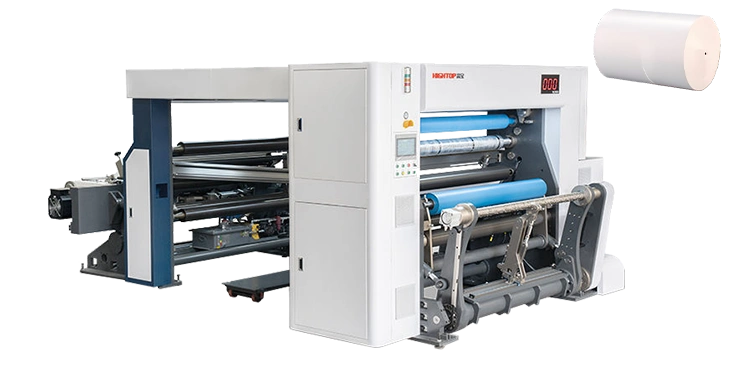
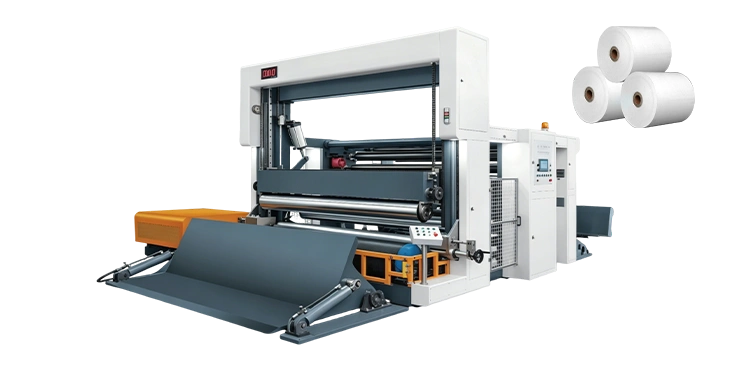
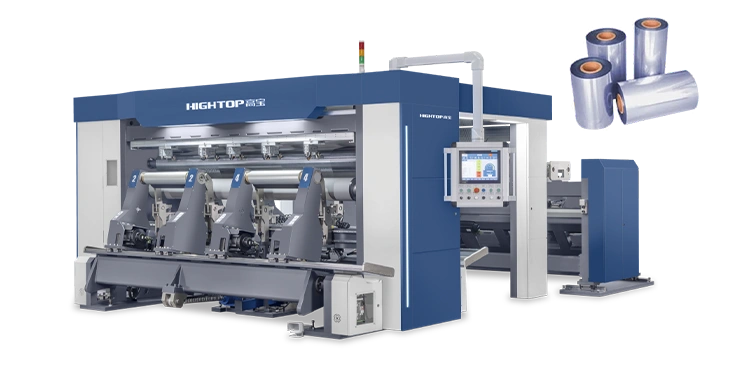
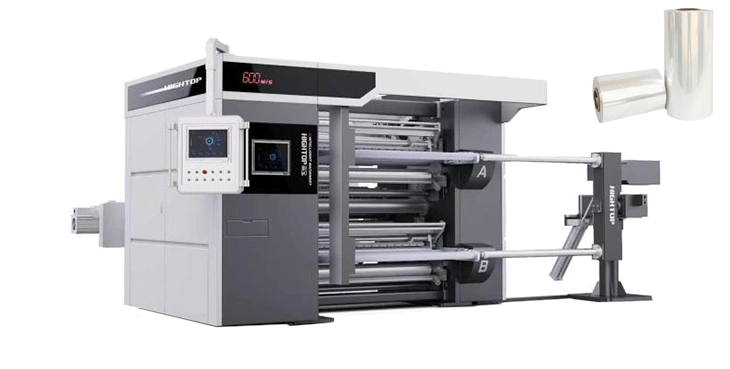
Once you have evaluated these factors against your specific material portfolio and production requirements, comparing the configurations of available machines becomes the next logical step. HIGHTOP's Slitting Rewinding Machine series—including models achieving ±0.2mm accuracy at speeds up to 800m/min—offers configurations for paper, film, label, and foil applications.

 Sep 07,2026