Sep 14,2026
If you are sourcing equipment to convert roll stock into flat sheets, you have likely encountered a confusing array of terms: sheeter, cross cutter, roll-to-sheet cutting machine, cut-to-length machine, and more. Different suppliers may use the same term for different machines, or different terms for the same machine. This inconsistency can lead to misaligned quotations, incorrect equipment selection, and wasted capital.
This guide clarifies the relationship between these terms, explains how roll-to-sheet conversion actually works, and provides a practical framework for specifying the right equipment for your production requirements.
Are They the Same Machine? Clarifying the Terminology
The short answer is: in most industrial contexts, “roll-to-sheet cutting machine” and “sheeting machine” refer to the same equipment category. The difference lies in emphasis, not in machine function.
The term “sheeting machine” is the broader, more established industry term. It describes any machine that converts a continuous web into discrete sheets. The term “roll-to-sheet cutting machine” is more descriptive—it explicitly states the input (roll) and output (sheet), making it useful in procurement contexts where clarity about the conversion path is essential.
Industry sources confirm this terminology overlap. In discussions of paper converting equipment, “sheeter” and “cross cutter” are noted as referring to the same roll-to-sheet process. Similarly, equipment used in A4 paper production lines is called by multiple names: A4 Paper Sheeter Machine, Roll to Sheet Cutter, and Paper Roll To Sheet Cutting Machine—all referring to the same core function.
What actually distinguishes equipment categories is the transformation performed, not the label. According to industry classification, paper cutter machines fall into four main categories based on transformation: roll-to-roll slitting machines (producing narrower rolls), roll-to-sheet cutting machines (producing fixed-length sheets), stack cutting machines (trimming stacked sheets), and die cutting machines (creating shaped products). The correct category depends on your input form and required output—not on machine size or rated speed.
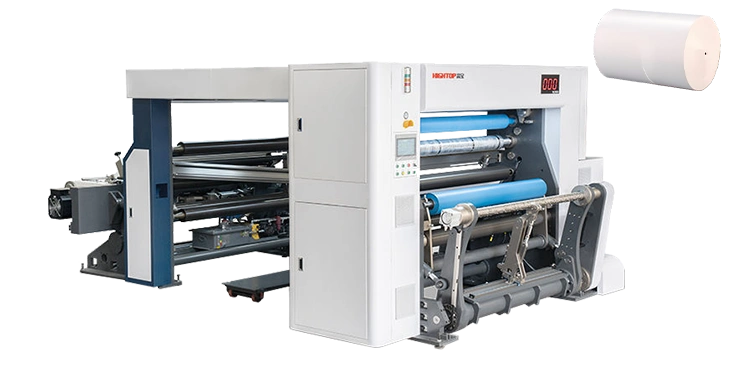
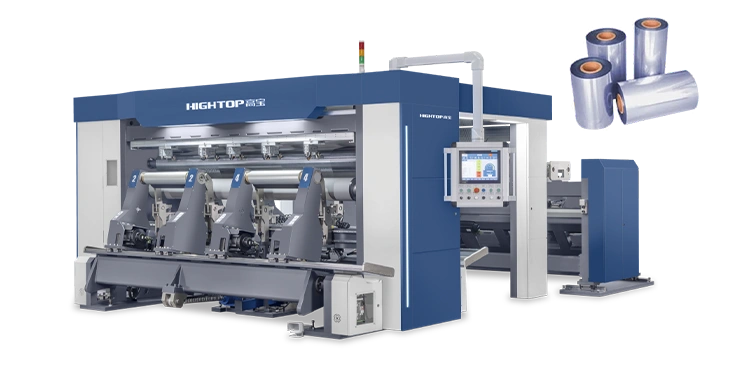
A critical distinction: A slitter rewinder and a sheeting machine are fundamentally different equipment categories. A slitter rewinder converts a wide roll into narrower rolls (longitudinal cutting), while a sheeting machine converts a roll into flat sheets (transverse/cross cutting). Choosing the wrong category means your output format will not match your downstream process.For converters who need both roll and sheet outputs, exploring the range of roll converting equipment helps clarify how slitting and sheeting complement each other in a production line.
How Roll-to-Sheet Cutting Actually Works
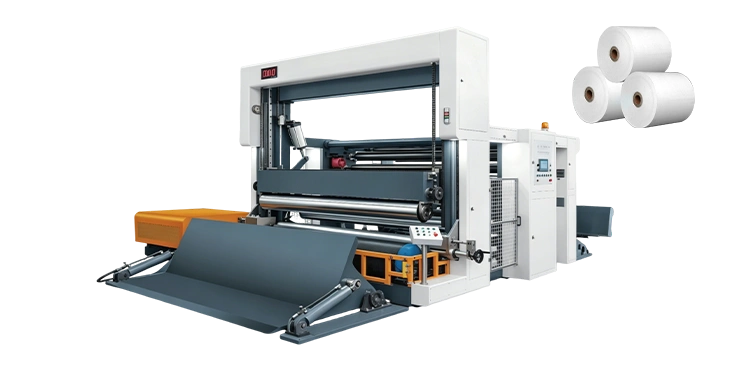
Whether you call it a sheeter or a roll-to-sheet cutting machine, the working principle is the same. The machine performs a continuous, coordinated sequence:
Step 1: Unwinding – The parent roll is mounted on an unwind stand. Tension is controlled to prevent wrinkles and uneven feeding. Heavier rolls and higher-GSM materials require more robust unwind systems with automatic tension regulation.
Step 2: Web Guiding – An edge-guiding or center-guiding system keeps the web aligned. Without accurate tracking, sheets come out skewed or with uneven margins—unusable for printing registration or precise downstream converting.
Step 3: Length Measurement – The machine measures web length using encoder-driven rollers or servo-controlled feed systems. The controller calculates when to trigger the cut based on the programmed sheet length. Accuracy at this stage determines whether sheets meet tolerance for offset printing, laminating, or manual feeding.
Step 4: Cross Cutting – A rotary blade or guillotine knife makes the transverse cut. The choice between cutting methods depends on material weight, required speed, and edge-finish requirements.
Step 5: Conveying and Stacking – Cut sheets travel on a belt or vacuum conveyor to the stacking station. Proper conveying prevents curling, overlapping, or misalignment. The stacker collects sheets into neat piles of a preset count, sometimes with joggers or air-separation systems.
Rotary vs Guillotine Cutting: Which Method Fits Your Material?
Two cutting technologies dominate roll-to-sheet conversion. Understanding the trade-offs helps match equipment to your material and production profile.
| Feature | Rotary Sheeter | Guillotine Sheeter |
|---|---|---|
| Cutting action | Continuous, non-stop | Decelerate-stop-cut-restart cycle |
| Speed | High (up to 300 m/min) | Moderate |
| Edge quality | Clean, minimal dust | Clean straight edge; comparable quality when properly set |
| Best for | High-volume, thin to medium materials | Heavier GSM, very thick board |
| Roller marks | No roller mark on material surface | May leave marks on sensitive materials |
The rotary shear (also called flying shear or drum shear) operates continuously, which enables higher production speeds and reduces wear on drive components. The guillotine shear (stop-start shear) operates on a decelerate-stop-cut-restart cycle. A correctly set and maintained guillotine shear produces comparable edge quality to a rotary shear on the same material, though at lower speed.
The advantage of rotary and flying shear is faster production speed and no roller mark on material surface; the advantage of guillotine shear is lower cost.
Key Specifications and What They Mean for Your Operation
| Specification | What It Measures | Why It Matters |
|---|---|---|
| Max web width | Widest roll the machine accepts | Determines the largest parent roll you can process |
| Sheet length range | Min/max sheet length | Ensure coverage of your smallest and largest sheet sizes |
| Cutting speed | Sheets/min or m/min | Throughput capacity; balance with accuracy needs |
| Cutting accuracy | Length tolerance | Tighter tolerance = less waste, better downstream performance |
| Max unwind diameter | Largest parent roll diameter | Longer runs between roll changes |
| GSM range | Material thickness range | Determines material compatibility |
| Stacking height | Maximum stack height | Affects pallet change frequency and floor space |
Understanding accuracy specifications: Typical cutting accuracy for industrial sheeters is stated as ±0.5mm for sheet lengths under 1000mm, or ±0.1% for lengths of 1000mm and above. Advanced servo-controlled systems can achieve ±0.2mm under stable production conditions.
Practical Application Scenarios
Scenario 1: A4 Office Paper Production
An A4 paper production line requires sheets measuring exactly 210mm × 297mm, with high consistency for downstream ream wrapping and packaging. The sheeter processes multiple rolls simultaneously to maximize efficiency. Key considerations include stable web tension to prevent sheet length variation, high-precision rotary cutting, and automatic ream counting at 500 sheets per ream.
Scenario 2: Packaging Board Conversion
A packaging converter processes 300–600gsm coated board for folding cartons. The sheeter must handle heavier GSM materials without edge cracking, maintain squareness for accurate die-cutting registration, and stack sheets in neat, consistent piles. Guillotine sheeters may be preferred for very thick board, while rotary sheeters offer higher speed for medium GSM ranges.For converters processing paper, board, and specialty materials, exploring material-specific sheeting solutions helps identify the configuration best suited to your production profile.
Common Problems and Diagnostic Framework
| Problem | Likely Cause | What to Check |
|---|---|---|
| Length variation | Encoder slip, tension fluctuation | Encoder coupling, tension settings |
| Skew / out-of-square | Web guide misalignment | Edge sensor position, guide response |
| Curl / waviness | Inadequate decurling | Decurler settings, material condition |
| Uneven stacking | Conveyor misalignment | Conveyor tracking, stacker jogger |
| Edge damage | Dull or misaligned knives | Blade condition, knife clearance |
Diagnostic sequence: Start with web guiding (most common root cause), then tension control, then blade condition. Material properties (moisture content, fiber orientation) also affect cutting behavior and should be evaluated when troubleshooting persistent issues.
Next Steps: From Understanding to Equipment Selection
Once you have clarified the terminology and understood the working principles, the next step is to match equipment specifications to your production requirements. Key decision factors include:
-
Material type and GSM range – Determines cutting method and blade selection
-
Parent roll dimensions – Sets minimum unwind capacity requirements
-
Sheet length and tolerance – Defines cutting accuracy specification
-
Production volume – Influences speed and automation level decisions
-
Downstream process – Determines stacking and output handling requirements
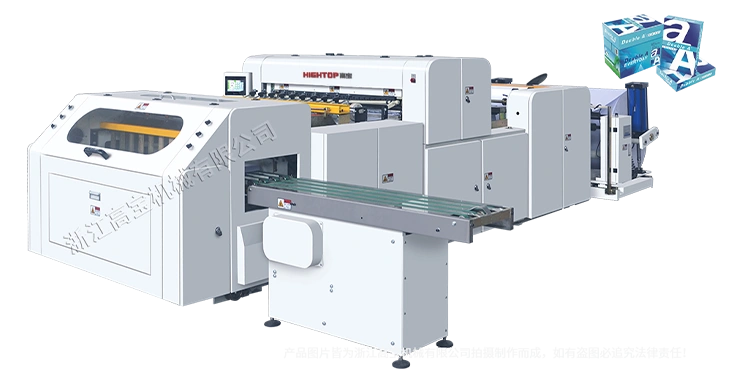
For a broader understanding of how sheeting fits into roll converting operations, the Sheeting Machine Guide: Roll-to-Sheet Cutting, Accuracy & Machine Selection provides a comprehensive framework covering machine components, material compatibility, and selection criteria.Once you have clarified these key decision factors, comparing specific machine configurations becomes the next logical step. HIGHTOP offers multiple sheeting machine series—including the GDHQ series for high-speed rotary sheeting, the ZHQ series for automatic stacking, and the HQJ series for servo-controlled precision cutting—each designed for different material and production profiles. Exploring the Sheeting Machine range helps identify which configuration aligns with your requirements.
Related Reading
-
Sheeting Machine Guide: Roll-to-Sheet Cutting, Accuracy & Machine Selection
-
Slitting Rewinding Machine Guide: Technology, Selection & Applications
-
How to Choose a Slitter Rewinder for Paper, Film, Labels and Foil
-
Rotary vs Guillotine Sheeting: Which Cutting Method Fits Your Material?

 Sep 14,2026